
The Quick Guide to Creating a Unique Unity Ceremony
.webp)

I love unity pieces in wedding ceremonies. Symbolizing our lives is a great way to think about where we are now, where we will go in the future, and who we might become. Though, I don’t like unity pieces just for the sake of them.
If you’re working with me and pitch me a unity piece that really doesn’t fit with anything we’ve talked about, I’m going to tell you honestly. For example, if you don’t like going to the beach, why on earth would we add a sand pouring unity to your ceremony? You should not include any unity element solely to kill time. There are plenty of ways to make your wedding ceremony unique without creating some cheesy metaphor to signify your love.
So, how do you go about developing a unity ceremony that truly belongs to you?
Here are the 5 elements I consider when brainstorming unity pieces with couples.
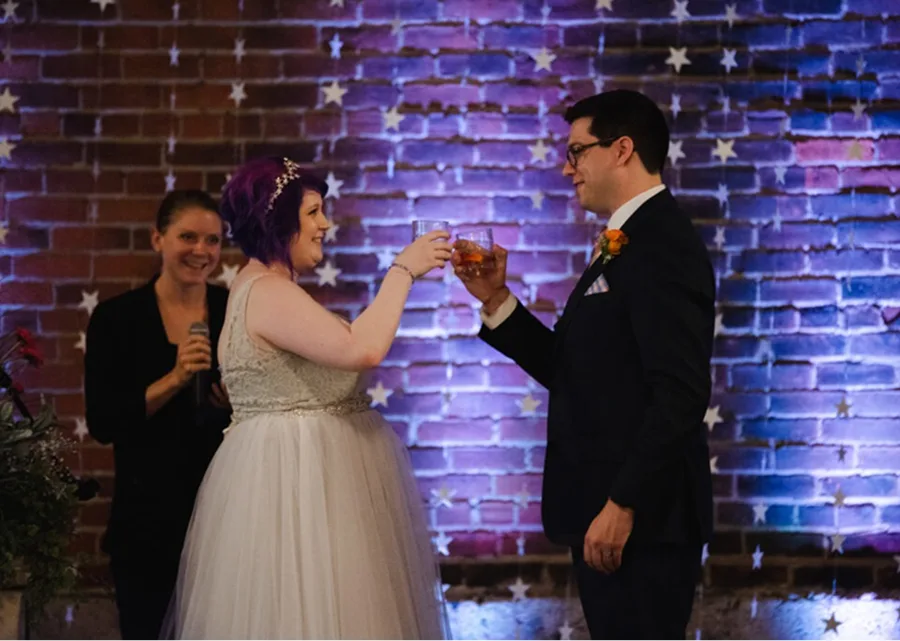
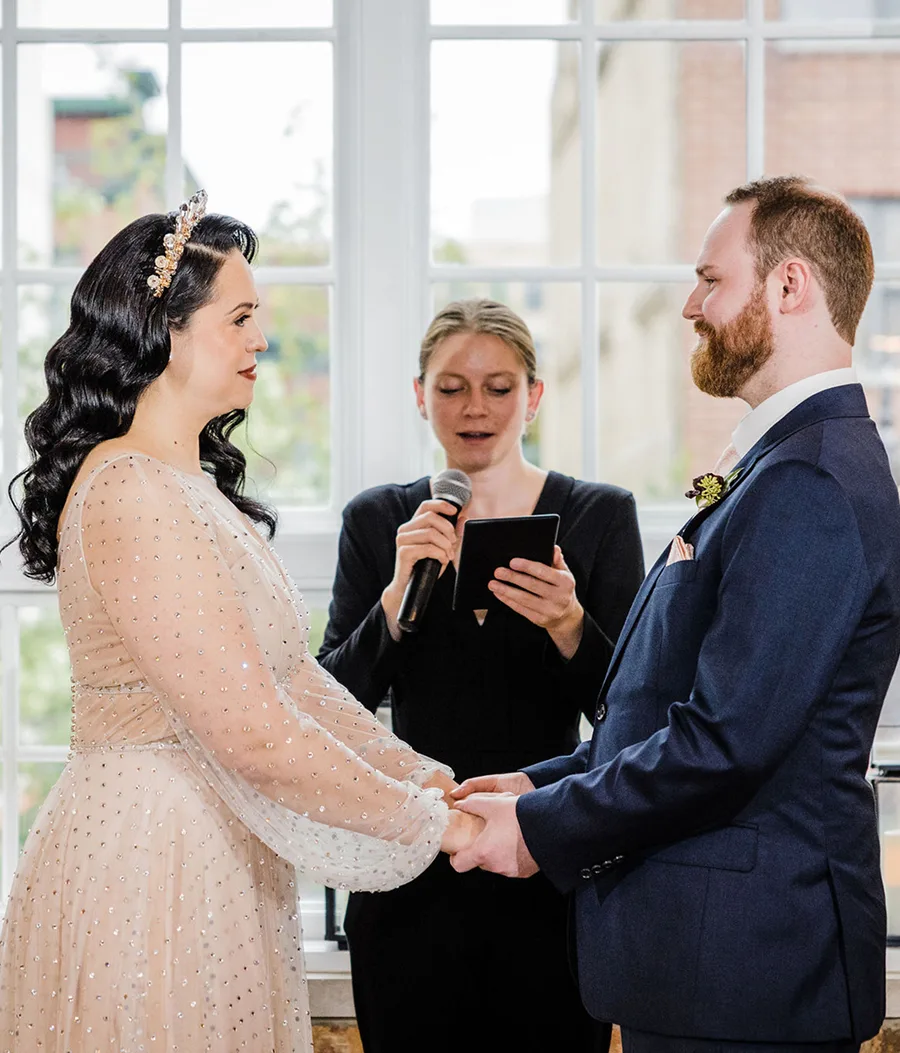
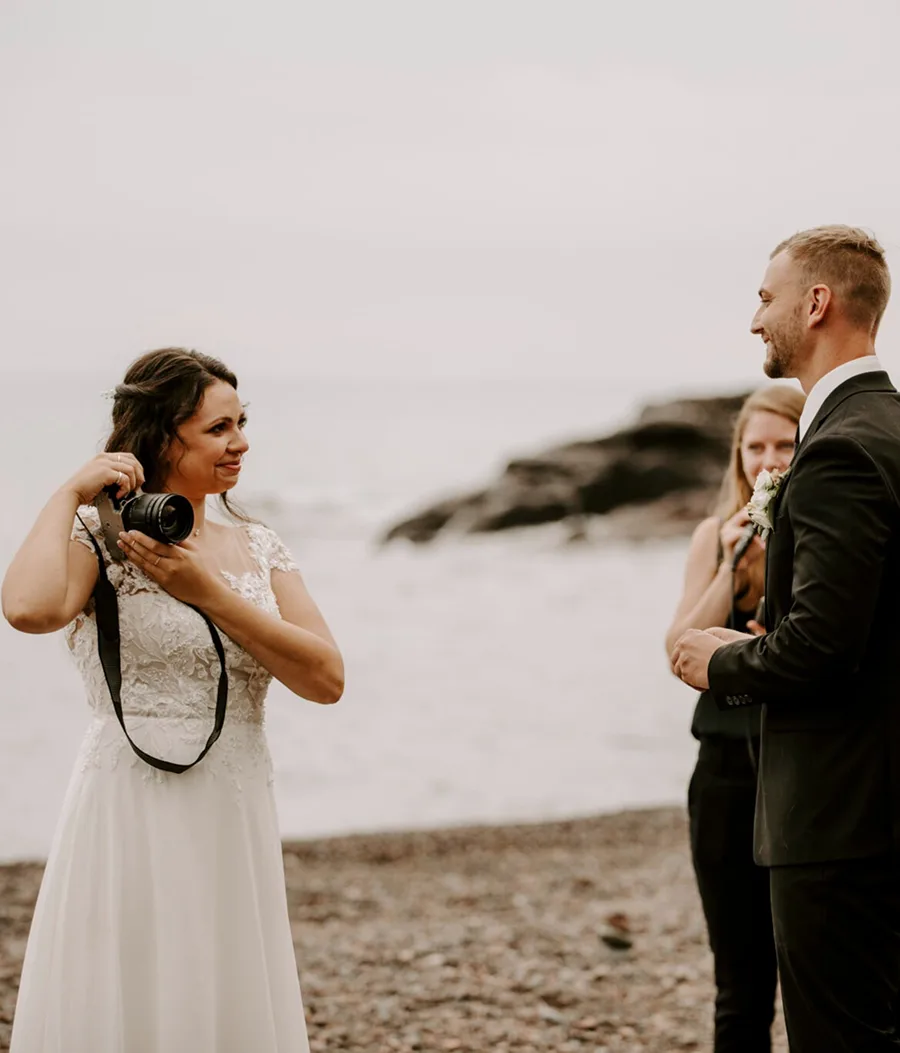
Photo Credit: Rubinski Works
1. What do you both love equally?
Do you cook dinner together? Do you want to travel the world together? Do you love lifting weights? Do you celebrate holidays like nobody’s business? Make a list of activities, hobbies, or locations that truly mean something to you. For example, if you like drinking mimosas, but mimosas don’t symbolize the two of you, don’t write it down. If your friends would be confused why you’re drinking mimosas in your ceremony, it shouldn’t be there in the first place.
2. What actions could the unity ceremony consist of?
A unity ceremony is meant to symbolize the combining of two souls. It doesn’t necessarily mean that those two souls have to become one, but there does need to be some action each person can partake in. For example, if you and your partner fish every weekend, what activities could you do to symbolize that? You could combine fishing materials into a box. Or you could sign your names onto a fishing rod. These are terrible examples, but hopefully this is simple enough to get you thinking.

3. Will this be something you want to keep?
Don’t do a unity ceremony just to live up to the customs of a unity ceremony. If you’re not really interested in keeping that vase of sand after, then don’t do a sand unity! Maybe a unity ceremony really isn’t the thing for you. Maybe you’re a minimalist. Maybe you just aren’t symbolic people. You don’t need a unity ceremony to make a wedding ceremony. You just need the two of you. And if you’re totally down for a unity ceremony, think of items you would love to have after your wedding day.
4. Do you want to include anyone in the unity?
If you have children, this is a great way to blend them into your ceremony easily. Or maybe you really want to include your parents. If you’d like to include anyone else in addition to the two of you, you’ll want to brainstorm additional elements that can create an action in the unity ceremony.
5. How much time do you have to devote to a unity piece?
A unity piece always includes a physical element. If you’re cramming for time, throwing together a unity piece isn’t a good idea. If you’ve got time to shop around or DIY your own symbolic element, then heck, go for it!

Below is an example timeline of an ideal wedding plan:
12:30 PM – Bride puts on dress and bride individual photos
12:45 PM – Groom heads to first look location
1:00 PM – First look, letter reading, couple photos
2:00 PM – Bridal party photos
2:45 PM – Family Photos
3:30 PM – Family Photos done
4:00 PM – Hide away for Ceremony (eat something, drink water, have time alone together)
4:30 PM – Ceremony Starts
5:00 PM – Ceremony ends – cocktail hour begins
6:00 PM – Grand entrance with bridal party
6:15 PM – Dinner starts
6:30 PM – Speeches
7:00 PM – Cake cutting and dessert served
7:30 PM – Start Dances (couple’s first dance, father daughter, mother son, then open dance)
8:30 PM – Sneak away for golden hour photos
8:45 PM – Sunset time
9:00 PM – Return to dance floor
10:30 PM – Sparkler Send Off

Here is an example timeline for a wedding in the winter where the sun sets at 4:00 pm, and the couple wants to do their first look down the aisle.
12:00 PM – Groom and groomsmen group and individual photos
12:30 PM – Bride and bridesmaid group and individual photos
1:00 PM – hide before ceremony starts
1:30 PM – Ceremony begins
2:30 PM – Ceremony ends, guests head to cocktail hour
2:30 PM – Family group portraits
3:00 PM – Bridal party group photos
3:30 PM – Couple portraits heading into sunset
4:00 PM Sunset time, head to reception
4:30 PM – Cocktail hour ends, guests get seasted
4:45 PM – Grand March
5:00 PM – Dinner served
5:30 PM – Speeches
6:00 PM – Cake Cutting
6:30 PM – First dances
7:00 PM – Photography coverage done
The Bottom Line

Hopefully, this gets your mind thinking about unity pieces. As with everything else in the ceremony, the most important part is that you two are present and engaged. You don’t need this to make your marriage, so, if you’re going to add a unity piece, ensure that it completely represents the both of you!
Have your unity piece ready and need some help with other elements of your ceremony?
Check out our post here for some really useful tips for writing your wedding vows.
Meet your
Officiants

Ready to make your moment,
your moment?

Wedding Tips
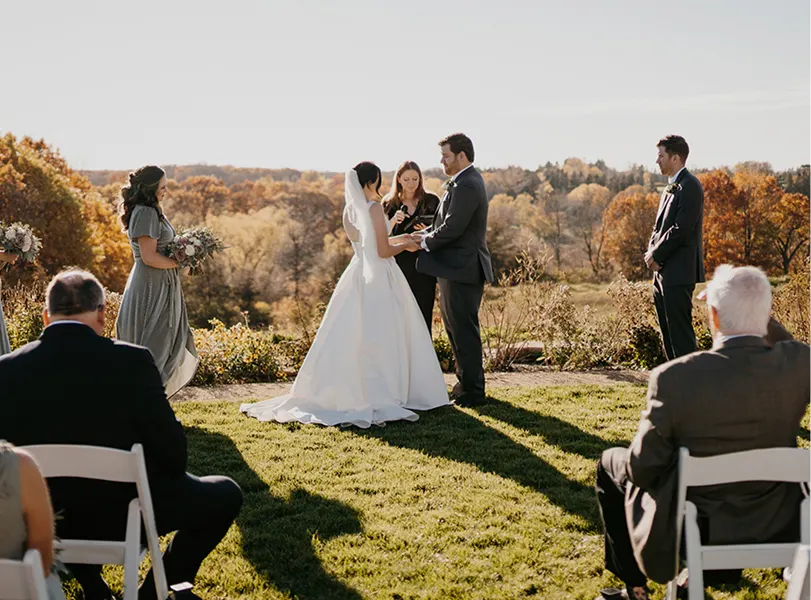
Four Elements to Consider When Planning Your Wedding Ceremony Around Lighting
When planning your wedding, the first element on your mind probably isn’t the sun’s position at every hour. However, as you embark further on the planning process, considering lighting is especially important if great photos are one of your top priorities. While there are some typicalities behind wedding timelines, don’t overlook lighting when creating that schedule, as it can affect various photos throughout your wedding day.
Choosing a photographer that knows lighting makesallthe difference, so I teamed up with Lulle Photo to give you some pointers on how to structure your wedding ceremony around lighting so you look good while tying the knot.
Here are four elements to consider when planning your wedding ceremony around lighting.
Wedding Tips
4 Elements to Consider When Choosing Your Wedding Ceremony Photographer
So, you’re engaged and ready to start planning your wedding. Yay! Congrats! How exciting and…terrifying, at the same time. Two of the biggest (and usually most expensive) vendors you’ll choose for your day are your venue and your photographer.
Though, narrowing down which photographer to hire in a sea of photographers can be tricky, especially if this is your first time booking a professional. Even if you have previously worked with someone trained in photography, wedding photography is a whole new field, and it’s definitely not a vendor you want to skimp on.
If you’re wondering what the most important traits you should consider when selecting your photographer, Michelle from Wandermore Photography and me (Liz) compiled five elements to consider when browsing wedding photographers.

When Should You Book Your Wedding Officiant?
So, you’re engaged! Yay!
You probably know the venue and have already selected the photographer – you’ve got your main priorities covered!
But then what? You’ve got a laundry list of vendors to contact, meet with, and choose, And all this hassle on top of working at your day job while juggling every other priority in life.
And there are all these websites that give you conflicting, and often unrealistic, information about when to book your wedding vendors.